WASHINGTON-
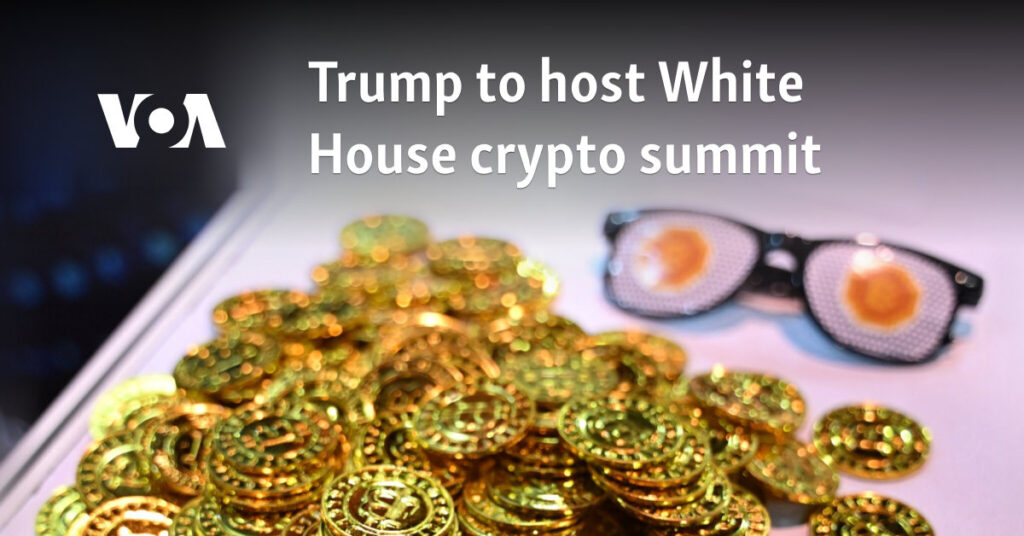
US President Donald Trump hosts major cryptocurrency players at the White House on Friday, a political boost for an industry that has struggled to gain legitimacy and where the Republican president faces conflict-of-interest concerns.
The president’s “cryptocurrency czar,” Silicon Valley investor David Sacks, has invited prominent founders, CEOs and investors, along with members of a Trump task force, to craft policies aimed at accelerating the growth of cryptocurrencies and providing the legitimacy the industry has long sought.
On Thursday night, Trump signed an executive order establishing a “Strategic Bitcoin Reserve,” a move that Sacks said fulfilled a campaign promise made to an increasingly important component of his coalition.
Guests at the summit include twins Cameron and Tyler Winklevoss, founders of crypto platform Gemini, as well as Coinbase’s Brian Armstrong and Michael Saylor, head of major bitcoin investor MicroStrategy.
In a post on X, Sacks said the event would be held as a roundtable and, despite industry interest, the White House would have to “keep it small.”
For believers, cryptocurrencies represent a financial revolution that reduces dependence on centralized authorities while offering individuals an alternative to traditional banking systems.
Bitcoin, the world’s most traded cryptocurrency, is heralded by its proponents as a substitute for gold or a hedge against currency devaluation and political instability.
Memecoins
Meanwhile, critics argue that these assets function primarily as speculative investments with questionable real-world utility that could leave taxpayers on the hook to clean up if the market crashes.
The proliferation of “memecoins”—cryptocurrencies based on celebrities, Internet memes, or elements of pop culture rather than technical utility—presents another challenge.
Much of the cryptocurrency industry disapproves of these tokens, fearing they tarnish the sector’s credibility, amid reports of quick pump-and-dump schemes that leave unwitting buyers paying for assets that end up worthless.
Trump also faces concerns about conflicts of interest.
American crypto investors were major supporters of Trump’s presidential campaign, contributing millions of dollars to his victory in hopes of ending the Biden administration’s deep skepticism toward digital currencies.
Trump also has significant financial ties to the sector, partnering with exchange platform World Liberty Financial and launching the “Trump” memecoin in January, as did his wife, Melania.
Trump, once hostile to the crypto industry, has already taken significant steps to overcome regulatory hurdles.
According to Thursday’s executive order, the bitcoin reserve will be made up of digital currency seized in criminal proceedings in the United States.
Using these assets “means it won’t cost taxpayers a cent,” Sacks said in a post Thursday night on X.
Sacks has said that if previous administrations had held on to their digital assets over the past decade, they would be worth $17 billion today.
Trump also appointed cryptocurrency advocate Paul Atkins to head the Securities and Exchange Commission (SEC).
Under Atkins, the SEC dropped legal proceedings against major platforms like Coinbase and Kraken that were launched during Biden’s tenure.
The previous administration had implemented restrictions on banks holding cryptocurrencies (which have since been lifted) and allowed former SEC Chairman Gary Gensler to pursue aggressive measures.
However, significant change will likely require action from Congress, where cryptocurrency legislation has remained stalled despite intense lobbying efforts led by investors, including Trump ally Marc Andreessen, an influential venture capitalist.