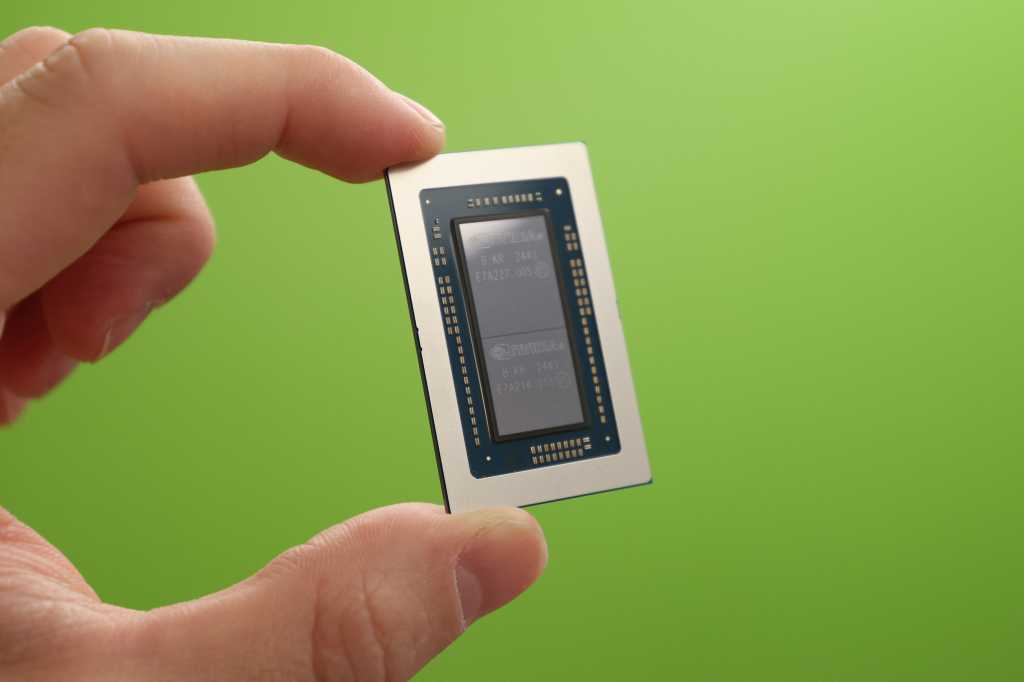
I’ve been putting the astonishingly expensive $7,000 Asus ProArt P16 laptop through some unusual tests for me. AI-focused RTX Spark reviewincluding running a growing real-world research workload through OpenAI’s massive 120 billion-parameter gpt-oss model. Instead of asking an AI to write a poem about Jensen Huang or take a photo of a cat on a motorcycle, I wanted to see if this specialized hardware could handle the kind of stupidly ambitious local AI work I’d normally reserve for cloud models.
Can. More interestingly, my monstrous desktop can do it too. Just much, much slower.
For a frozen comparison, both systems processed the exact same workload, generating 472,084 tokens along the way. The ProArt P16 RTX Spark finished in 33 minutes and 13 seconds. My desktop took 52 minutes and 51 seconds.
That’s a 19-minute, 38-second kick in the ass delivered to a fully loaded, fire-breathing high-end desktop with an RTX 5090.
The reason gets to the heart of what makes these new high-memory AI systems so interesting, and why you can’t just build your own equivalent out of conventional enthusiast PC parts.
128 GB is not always 128 GB
The ProArt P16 RTX Spark includes 128GB of unified LPDDR5X memory, with approximately 96GB available for the GPU during my testing. My desktop combines its RTX 5090’s blazingly fast 32GB of GDDR7 memory with 96GB of conventional system RAM.