Search queries are growing at their fastest pace in five years, Google parent company Alphabet said in its earnings report last week. However, Google’s search revenue growth slowed to 12 percent year over year in the third quarter, down from about 17 percent in the previous quarter. Meanwhile, growth in paid clicks (clicks on ads that generate revenue for Google) slowed from 13 percent to 8 percent.
That’s still substantial growth, but it’s not the direction investors expected from a company that plans to spend about $200 billion this year on infrastructure, much of it to support AI. Alphabet shares have fallen about 14 percent since it reported earnings last week, as investors question the costs and returns of the company’s AI ambitions.
“This is the first major disruption Google has faced in its core business in decades.”
Chief commercial officer Philipp Schindler said currency effects were the biggest driver of the slowdown in revenue growth, along with changes in advertiser spending in particular industries. But Google’s AI transformation also contributed to the slowdown: AI-mode queries were growing strongly but were monetized at a slower rate than traditional searches, Schindler says. He added that Google feels good about its track record and that its “advertising experiments have shown promising results.”
It’s not yet clear whether that reflects a deliberate ad rollout, as Google says, or a more fundamental problem with AI search advertising.
Year-over-year growth in search revenue vs. paid clicks in Q1 and Q3 2026
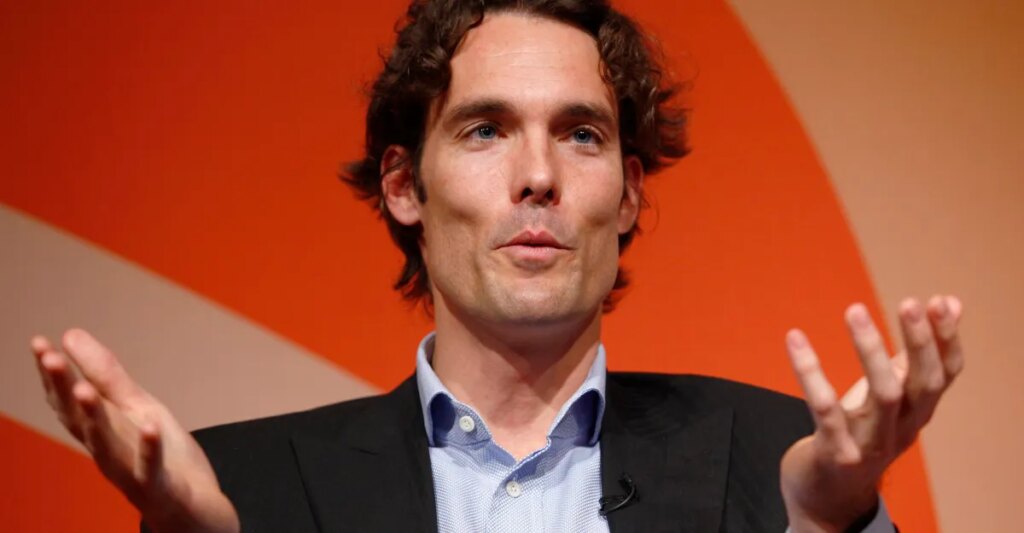
“This is the first major disruption Google has faced in its core business in decades,” says Nate Elliott, a principal analyst at eMarketer who covers artificial intelligence and advertising. The edge. AI is changing how people find information and whether they click on ads that fund Google’s business.
The core of Google’s search business increasingly depends on what you ask. In many cases, AI Overviews adds generated summaries to search results; Choosing AI mode turns searching into a conversation. But someone searching for Nike can still find shopping listings and text ads that look familiar, says Andy Taylor, vice president of research at digital advertising agency Tinuiti. They look to buy shoes instead of receiving an AI explanation about them.
Google’s argument is that AI is expanding business. Schindler says most AI mode queries are “incremental”: additional questions rather than replacements for existing searches. Many are also “upper funnel,” meaning people research potential purchases before they know what they want. The company sees those searches as opportunities to sell more ads over time.
Google is currently expanding ads in AI Overviews and AI Mode, including internationally and in multiple US AI Mode conversation shifts. It has also rolled out ads to its standalone Gemini app, saying formats developed for AI Mode could be ported over, but hasn’t announced when.
The thing is, Google, as well as competitors like OpenAI, are still figuring out how to make ads work on AI, delivering results to advertisers and avoiding alienating the people who use their AI tools.
For now, advertisers continue to get results from Google. Tinuiti’s same-store advertisers increased their spending on Google paid search by 14 percent year over year in the third quarter, while maintaining their return on ad spend goals.
“If people are clicking less frequently, that’s a challenge they need to solve.”
“We continue to see good performance and we don’t see performance being affected,” Taylor says.
The problem is that advertisers can’t isolate Google’s AI ad performance. Google doesn’t allow them to separately target that inventory or break down its performance, Taylor says. Stable overall returns could mean that AI ad traffic is still too small to noticeably affect results, or that it performs similarly to existing inventory. Taylor suspects it’s mostly the former.
That leaves an important question unanswered: How much will AI add to Google’s advertising business, and how much could it replace? Additional queries could generate new revenue even if each generates less than a traditional search. The risk is that AI mode will also drive people away from the searches that Google monetizes most effectively. Google’s claim that most AI Mode queries are additional doesn’t tell us how much revenue it could lose from the searches AI Mode replaces.
“If people are clicking less frequently,” Elliott says, “that’s a challenge they need to solve.”
The promise of conversational advertising is that people share much more about their needs than they would with a few keywords. But platforms still have to identify which parts of a conversation are important and match them with the right ads.
“It’s not a failure that it’s going to become more effective advertising,” Elliott says.
An initial study of ChatGPT ads suggests that richer conversations don’t automatically translate into more retail sales. An October working paper found that visits to the United States from ChatGPT ads generated 64 percent less revenue for retailers per session than visits from Google Search ads: $0.89 versus $2.45. The working paper measures retailer sales rather than platform revenue, and its findings on ChatGPT do not establish how Google’s AI ads perform.
Taylor cautions that these comparisons depend on what people are looking for. Someone searching for Nike sneakers on Google may already be ready to buy them, while someone asking an AI tool which running shoes to choose is still doing research. A higher return on sales could reflect that difference in purchase intent rather than more effective ads.
Google’s current business has given it room to take its time with AI ads, Taylor says. He points to its successful shift to mobile: Initial phone traffic was less valuable to advertisers because buying over the phone was cumbersome, but that changed.
Elliott warns that finding effective advertising formats can take years. Search engines started with banner ads before adopting paid listings; Social networks went through their own experimentation. The current formats may not be the ones that ultimately work.
But Google’s growing AI spending raises the stakes. Search revenue continues to grow in double digits, but the company has yet to prove how well it can pay for its new form of search.
“They don’t have it all figured out at all,” Elliott says. “Nobody has it all figured out.”