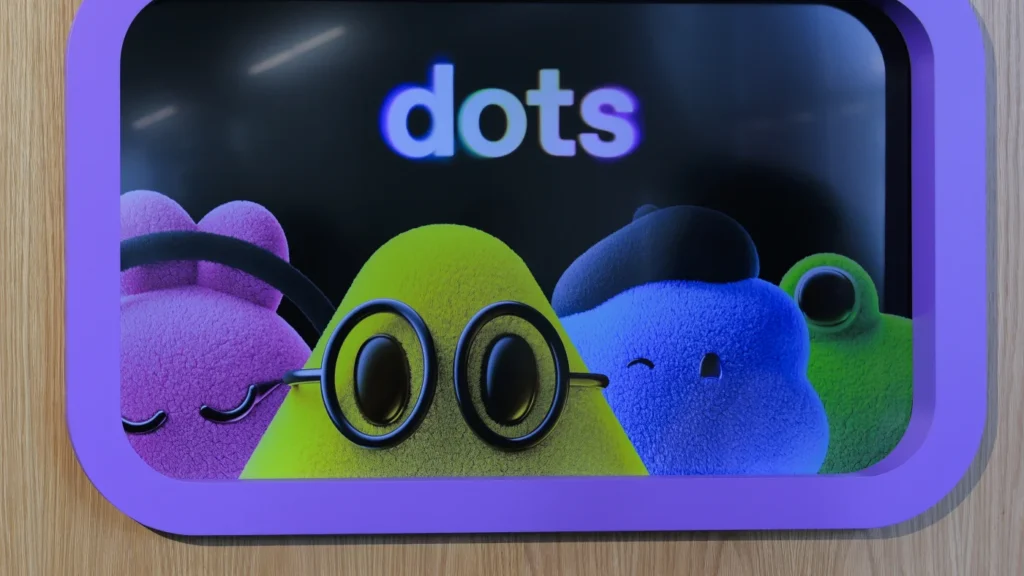
A pop-up store for “points”, a personal assistant at the OpenAI developer conference on September 29, 2026 in San Francisco, California. Sam Altman announced a new artificial intelligence personal assistant called “dots” to rival Meta’s Muse.
Heather Diehl/Getty Images
hide title
Heather Diehl/Getty Images
Artificial intelligence is here to help with Black Friday.
This weekend, 59% of consumers plan to use AI to support their winter shopping, according to the National Retail Federation.
But AI has shown that it is no different from humans in one thing: it makes mistakes. The stakes of those hallucinations are much higher when your wallet (and vacation memories) are on the line. These tools also become better buyers when you hand over personal data, which also means handing over more information about your private life to big tech companies.
Here are some tips (and notes of caution) before using AI as your personal holiday shopper.
Treat AI searches like a conversation with a child
Traditional online shopping is based on search terms and infinite scrolling of products. AI is meant to be a conversation.
Unlike shopping on a retail website, AI platforms are designed to be more like texting apps. The prompt bars on these platforms are located at the bottom of the page, inviting a conversation between the user and the robot about what to buy.
After all, it can be difficult to know what keyword to enter to buy from your uncle before the Christmas exchange. Instead, AI allows search based on a vibe, such as describing that guy’s hobbies and personal style. If a buyer wants to purchase a suitcase to support their uncle’s European travel dreams, this makes it easier to narrow down the options.
“You can say if that bag is too full, will it fit under the seat on JetBlue?” says Emily Pfeiffer, a principal analyst at Forrester who advises retailers and brands on digital commerce strategies, including artificial intelligence. “Don’t give me the dimensions,” he advises, “tell me if it fits my use case.”
Pfeiffer cautions that while AI is capable of analyzing these nuanced purchasing criteria, it works best by taking more of a hand.
“It’s best if you imagine it’s a small child who is likely to misinterpret your request,” Pfeiffer said. “You want to be as specific and clear as possible.”
AI agents can shop for you. Be careful what you give them
Newer AI models can do more than talk and generate ideas. They can carry out purchasing tasks.
If shoppers, for example, are concerned about Christmas shipments arriving on time, AI can monitor an email inbox to track packages, and even send messages to a late sender on the buyer’s behalf. Beyond simply suggesting a gift, agents can make the actual purchase (with your money).
These are useful features, but they require granting access to sensitive personal data, such as an inbox or credit card. One of the first questions Muse, Meta’s AI agent platform, asks is whether the user wants to connect their email and calendar.
Meta says their AI is very safe. Each is assigned its own AI agent, and the company promises that the information buyers share with it will be kept private. They say that particularly sensitive information, such as credit card numbers, is stored separately and never seen directly by the AI.
However, Meta has also long been accused of violating user privacy, such as in a 2022 case regarding inappropriate sharing of user data. Meta did not admit wrongdoing, but settled for about $725 million.
Beyond the Meta, there are cases of AI jumping railings that the programmers established for it. Users have also reported that their AI agents act without their consent, such as sending your home address to a Facebook Marketplace buyer and booking a hotel.
Philip Bruno, chief strategy and growth officer at ACI Worldwide, says he would share what he’s buying with AI, but cautions to be more careful with personal information.
“I cook for a family of four. It’s nice to be able to say that,” says Bruno. “I would be very careful with payment information.”
In that sense, experts warn buyers to be careful with other of the people information. It’s easy to give most AIs a lot of information about your father while you think about his gift. Know’s AI agents can also use this to create buyer profiles. friends and family. It can help to be elusive and not specify who you are buying for during brainstorming.
Just like humans, it takes time for AI to find the best deals
One of the main selling points of using AI agents is that they can check multiple websites and compare prices, so they can be reviewed by humans, all in one place. That doesn’t mean that the first price it shows you is the best.
“One of the biggest misconceptions about AI is that it somehow sees everything,” Pfeiffer says. “That is simply false. It gives you the best possible answer as quickly as possible.”
AI agents still need time to search for deals. Many tend to let buyers observe as they browse the web, rather than relying on pre-established knowledge.
This automation can also save time for the user. Agents can often run in the background 24/7.
If users are not in a holiday rush, they can let the AI continue shopping for weeks or even months, only sending a notice when the price falls within an economic range.
Just know that these agents don’t always have access to all websites. Amazon, for example, blocks Muse, arguing that Meta did not alert Amazon about the plans and that the agents did not identify themselves while browsing.
Check the work of the AI
Despite all the advances since the launch of ChatGPT four years ago, AI still hallucinates and makes mistakes.
Visa recently launched a report warning buyers to beware of AI buyers. Tested different AI models and found that they did not recommend a product that met customer needs in 42% of tests; more than half of them still recommended a product that didn’t match.
That provides even more reasons to click and read about any potential gift an AI recommends to make sure it’s what buyers want.
Otherwise, people may find themselves turning to the same AI agent for help making a return.