Tero Vesalainen/Getty Images
How much filter is too much for kids and teens posting selfies on social media?
That’s the question facing state attorneys general across the country following a landmark settlement with Meta this summer. As part of the settlement, the social media giant agreed to block some digital beauty filters for minors, specifically those that mimic extreme transformations like cosmetic procedures or heavy makeup.
Now, the burden falls on state officials to tell Meta where to draw the line. But defining where harmless fun ends and harmful manipulation begins is far from simple.
Impact on the body image of young people
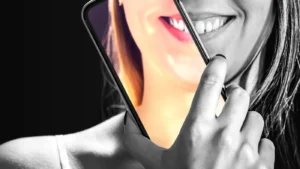
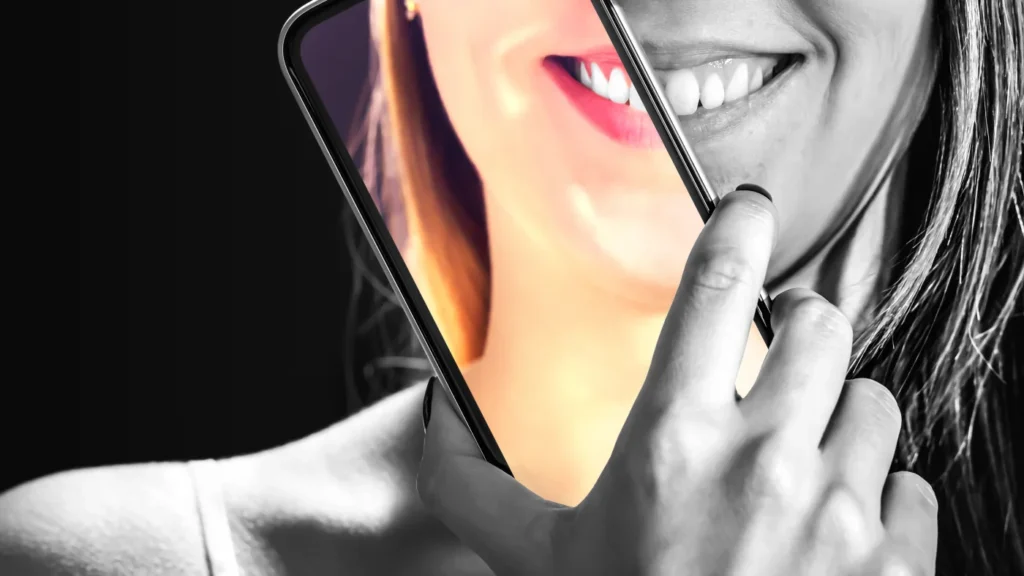
For teens navigating the digital landscape, the pressure of perfection online is a daily reality. Much of that pressure has been fueled by online beauty trends like “Instagram face.” Coined in 2019 by The New Yorker For writer Jia Tolentino, the phrase refers to an appearance characterized by a small nose, high cheekbones and full lips. Although it can traditionally only be achieved in real life through plastic surgery or extreme makeup, it can be applied instantly online using beauty filters.
Mia Lerner, a 17-year-old high school senior in California and youth body image activist, knows the toll these digital tools can take. She told NPR that experimenting with beauty filters contributed to her eating disorder and left her struggling with her self-image.
“I’ve even tried fixing my nose with AI,” Lerner said. “I think my face looks much better in [the] photo that I manipulated with these beauty filters. But I still live with this nose I see in the mirror.”
Lerner welcomes the aspect of the Meta agreement that seeks to restrict beauty filters for minors. “It’s a very important step in the right direction,” Lerner said.
The problem of ‘subtle’ editing
However, the agreement reached in August between Meta and 47 US states (plus Washington DC and three territories) does not establish a blanket ban on all digital effects.
Filters that transform users into playful characters, such as elves or puppies, will still be available for young people. But so will filters that offer subtle beautifying effects, such as softening skin tone or adding a slight glow to the eyes.
It is this relatively minor category of editing that particularly worries Lerner.
“When I see something that’s obviously been generated by AI, it’s very easy for me to logically say, ‘Well, it’s obviously been manipulated, so I can’t compare myself to that,'” Lerner said. “But when I see these videos of people that are lightly edited, it’s a lot easier for me to go down that path of comparison.”
Technological guardrails versus moving targets
Meta has already implemented measures to manage beauty filters, increasingly powered by artificial intelligence.
The tech giant has already banned filters that explicitly promote cosmetic surgery, such as those that superimpose lines of pre-surgery markers onto the skin. It also closed its platform to third-party creators of these tools, introduced mandatory labels for AI-generated content, and implemented automated AI detection systems. Despite these systems, harmful aesthetic filters and features that keep children trapped in an endless cycle of scrolling, clicking, and staying online persistently escaped these barriers, as a federal judge wrote in a summary ruling denying Meta’s defense this summer.
Meta isn’t the only tech company struggling with teens’ access to beauty filters. TikTok also restricts its use to users under 18 years of age. Snapchat does not restrict teens’ access to filters. Neither company responded to NPR’s request for comment. YouTube told NPR it has no filters. But there’s nothing stopping users from posting images or videos created with third-party filters on the platform – or on TikTok and Instagram, for that matter.
Meanwhile, state attorneys general are nearing the end of a two-month period they set to provide Meta with guidance in the form of a letter on what constitutes a prohibitible filter and what does not.
Evolving beauty standards
They face a moving target as digital beauty standards rapidly evolve.
“If states want to define what a beauty filter is, they should define what beauty is,” said Florencia Solari, a creative technologist who has spent years developing artificial intelligence and augmented reality experiences for global brands.
Solari noted that trend cycles move quickly. The “face of Instagram” is already falling from grace. “People are starting to move away from that because it’s starting to look a little clownish,” Solari said. “Now we’re going towards extreme thinness. So that’s another problem.”
As a result, the tools used to achieve the latest look are also changing. So what lawmakers might call an “extreme” beauty filter in 2026 will likely be different in 2027.
Technological changes
While beauty standards change rapidly, so does technology.
Instead of sitting in boardrooms debating pixel thresholds for cheekbones, Kelly Frasier, co-author of a recent study highlighting the negative impacts of social media on teen body issues, said policymakers should consider the fact that teens will soon be able to use AI to create entire fake universes around them, not just change their appearance. Therefore, they should focus on broader regulation of AI for minors.
“I think policymakers are asking the wrong question if they’re wondering where to draw the line for beauty filters,” Frasier said. “And to be honest, filters will probably become completely obsolete in the next few years.”
Legal and regional challenges
In addition to technological and cultural challenges, legal experts warn that individual states may have difficulty reaching a consensus on what does and does not constitute what the agreement describes as a “cosmetic procedure filter.”
“What we really don’t know is what happens if states don’t agree with each other.” said David Greene, senior attorney at the Electronic Frontier Foundation. “What if one state thinks raising eyebrows is completely acceptable and another thinks it’s horrible?”
NPR contacted the attorneys general offices of the four plaintiff states that led the lawsuit (California, Colorado, Kentucky and New Jersey) for an update on the guidelines. But officials either declined to comment or did not respond.
Beyond the United States, some international regulators hope to avoid discussions over definitions of beauty filters altogether.
In Europe, the proposed KIDS Law, designed to regulate young people’s use of social media, takes a broad approach.
In this plan, “beauty filters, not extreme beauty filters, but beauty filters and that’s it, are prohibited for minors,” said European Commission spokesman Thomas Regnier. Regnier said EU lawmakers are closely watching the implementation of the US deal. “We want child-friendly services for our children. A beauty filter has nothing to do with a child-friendly service,” Regnier said.
Teenagers want to be heard
Meta says it plans to enforce the ban on “cosmetic procedure filters” early next year.
For young activists like Lerner, the hope is that tech companies and regulators will include teens in these discussions. “Very often it’s just the government or these companies that are involved in these conversations,” Lerner said. “The company should ask us our real insights, like ‘Are people really using these extreme AI filters or is that not going to make a difference?’ ‘Do we need to aim for something else?'”
Meta said the company has partnered with teenagers over the years, but did not respond to NPR’s question about whether it is currently doing so.