Signal is restricting the ability to take screenshots on Android and iOS devices in an effort to prevent AI agents from reading users’ messages and other data. AI capabilities built into operating systems that analyze on-screen information to learn more about the user are “undermining Signal’s ability to independently ensure privacy,” Signal President Meredith Whittaker said in a blog post, while urging operating system vendors to make it easier for app developers to control what data agents can access.
“We want to be very clear: It’s a serious problem that Signal — and app developers beyond — lack robust tools to prevent AI agents from undermining app-level privacy,” Whittaker said. “Even when we can detect and block access to AI data, Google, Apple, Microsoft and others do not offer ways for developers to easily restrict such access to AI data without drastically compromising the core user experience. This is also why we cannot currently implement these protections on macOS.”
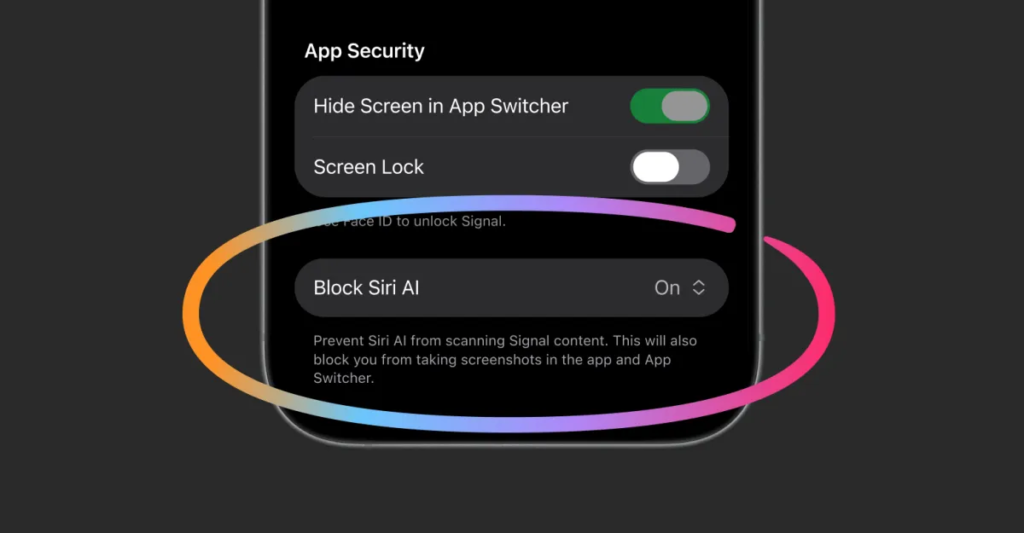
Signal is addressing privacy concerns by blocking the ability to take in-app screenshots on iOS 27 and Android, which should prevent Siri, Gemini, and other Android AI assistants from reading on-screen content. Users can restore screenshot capabilities in the Signal app’s settings, but Whittaker warns that doing so will “potentially expose your (and your contacts’) Signal content to these AI agents and violate our privacy safeguards.” Whittaker admits that Signal’s screenshot blocking solution is “incomplete” as it does not address alternative ways AI agents can access app data, such as retrieving it through the device’s file system.
Signal took a similar approach last year to prevent Microsoft’s controversial Recall feature from capturing secure chats. The encrypted messaging service says it is struggling to develop a better solution due to a lack of available information on how AI agents actually access app data, and is now calling on Apple, Google and Microsoft to provide “simple technical tools and accurate documentation” to app developers. Signal also says more tools are needed to prevent third-party agents, like Meta’s Muse, from using deep accessibility settings in apps as a “master key” to access app data.
“We must all recognize that the current integration of AI agents into the operating system, without these common-sense remedies, represents an existential threat to application-layer privacy and the ability of independent developers like Signal to protect their sensitive data,” Whittaker said. “Signal is the canary in the coal mine, but this affects the entire ecosystem and should galvanize anyone who cares about these fundamental rights.”