Three years ago, I wrote an obituary for the smart display. The category (smart speakers with attached touchscreens) was left stagnant with some underpowered devices from Google and Amazon that tried to do too much and did too little well. At that time, I also explained what they should do to improve. This month, Apple and Amazon launched new smart displays that check almost every box on that list.
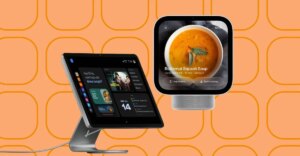
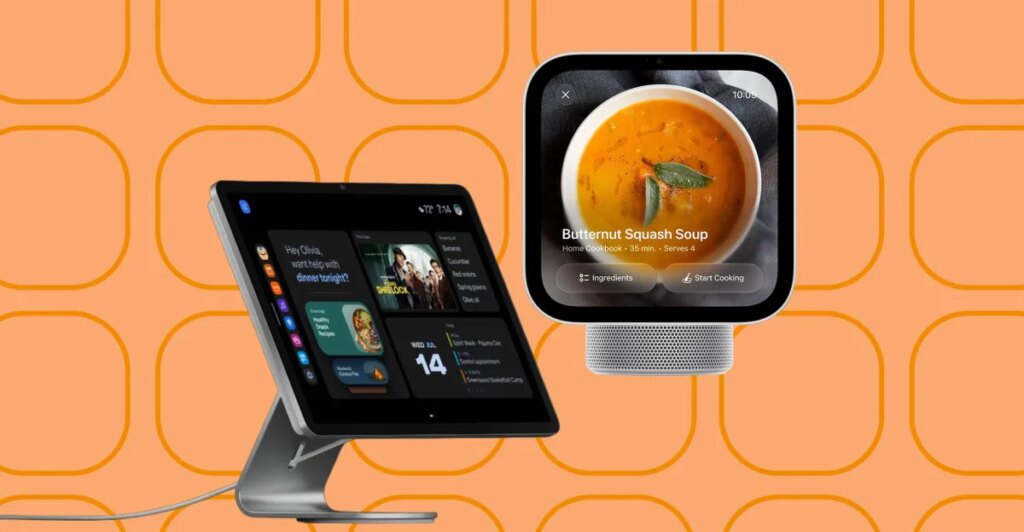
Based on my brief hands-on time with Apple’s first smart display, the $299 HomeView, and Amazon’s $499.99 Echo Show 16, a ground-up rebuild of its smart display line, these could finally turn the smart display into what it should have always been: the family computer. It’s not a place to do homework or pay bills, but rather a shared screen the whole family can use to check the calendar, see who’s at the door, and find out what’s for dinner.
The biggest change is that both companies have finally brought computing-class hardware to the space: Apple with its A18 chip (the same as in the MacBook Neo) and Liquid Retina display, and Amazon with a MediaTek processor and the same Nanomatte display as its new Alexa tablet. This turns a category plagued by underpowered hardware and limited software into devices that people might actually want to use.
The problem is the price. In 2023, the Echo Show 5 will cost $85 and the Nest Hub will cost $99. Apple’s HomeView, the cheaper of the two new models, costs three times as much. But these devices now have a much clearer purpose, beyond being a vessel for each company’s revamped voice assistant. And with the software to back it up, it may really be worth the investment.
As our lives have become increasingly digital, the need for a central place to gather all the information needed to manage a busy household has only grown. For years, the calendar, shopping list, meal plan, and household tasks lived inside a person’s phone, creating an exhausting mental load. Add to that the connected home, and the need for a community device increases even more: an interface that anyone in the house can use to check who is at the door without opening it, adjust the thermostat, or dim all the lights with a touch or a quick voice command. Yes, some devices can do some of these things, but none do them all well.
The popularity of devices like the Skylight Calendar shows the need for a common home display. And while a tablet may seem like a natural choice, it has two challenges: limited multi-user support and anything with a battery will walk into someone’s room and die under a pillow. I learned it from personal experience. I thought Google’s Pixel tablet, a hybrid tablet and smart display, was the next evolution of the category, although I wasn’t crazy about its detachable screen. That turned out to be a big problem in my house, along with its half-hearted smart home support. Google reportedly canceled its successor 18 months later.
With their new devices, Apple and Amazon are bringing three things to the category that I’ve been waiting for years: computer hardware, a screen designed for sharing that can easily switch between users, and a screen that’s always on and as easy to use as a light switch. There’s no need to enter a PIN or swipe the screen saver, just reach out and tap to control the lights or scroll through the calendar. Both HomeView and Echo Show 16 seem to solve these problems. (Of course, I’ll have to test them properly to be sure.)
Apple’s approach treats the person as the user; HomeView is designed to get to know you
However, that’s where the similarities end. What I find fascinating about these two product launches side by side is the different approach each company is taking to tailoring these devices to your home.
Amazon has created a home display that works without your phone; You don’t even need one to set it up (although it helps). Apple has created a screen that is an extension of your phone; It has common features, but they are limited compared to what you can do if you connect your phone.
The reason for the split is obvious: Apple is based on the iPhone; Amazon relies on, well, everything else. Apple’s approach treats the person as the user; HomeView is designed to get to know you. In Apple’s demo, Siri AI knew exactly when your friend would arrive at the front gate of the airport based on reading your text messages and could turn on the coffee machine so your espresso would be ready the moment you walked in. But while HomeView has common features, most of the good stuff seems to appear only when HomeView recognizes your face and your phone is nearby.
Amazon’s approach treats the household as the user; The Echo Show is designed to get to know your home
Amazon’s approach treats the household as the user; The Echo Show is designed to get to know your home. The company’s Omnisense technology built into its devices can detect presence, temperature, and room acoustics throughout your home. One of Amazon’s demos showed that when someone walks down your driveway, a figure appears on a map of your home and you can tap it to see a live view of your approach through your Ring camera. While Amazon doesn’t have the same personal context as an iPhone, the Echo Show 16 offers broader home features, including meal planning, a full Fire TV, and a color-coded home calendar.
Amazon is selling a maximum feature set at a premium price designed for everyone, while Apple is pushing a more polished, more limited product at a lower price, aimed squarely at its current users. I’m looking forward to seeing which approach works best once I have these devices in my home. But for the first time in years, I’m excited to try a smart display. I guess my obituary was premature.
Photography by Jennifer Pattison Tuohy / The edge