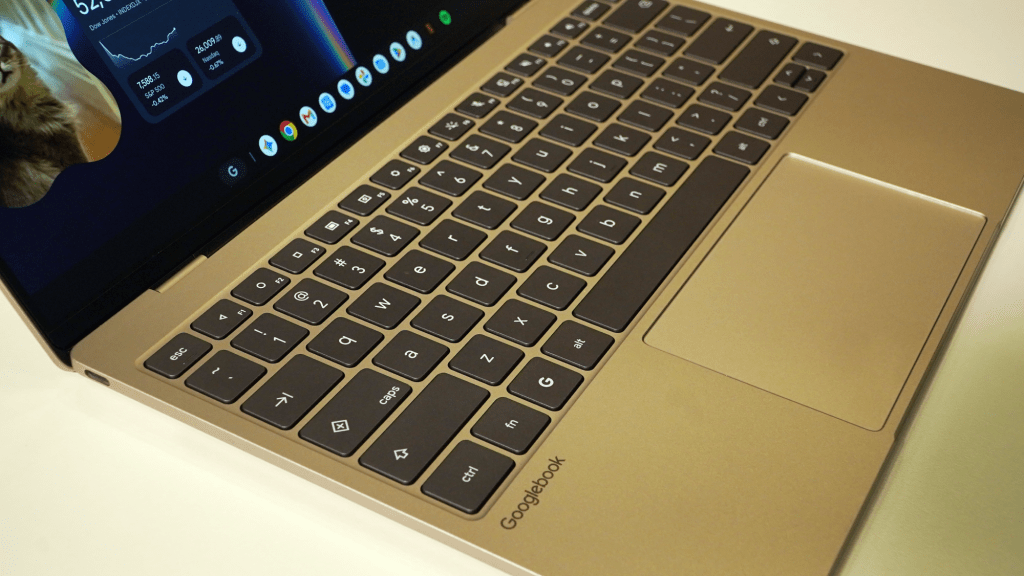
While its name is surprisingly uncreative, it’s also much simpler than Aluminum OS. Developed specifically for its new laptops and based largely on Android 16 and Android 17, Googlebooks are clearly aimed at Android users.
Google’s first new operating system in 15 years
Unlike ChromeOS, Googlebook OS is designed to be intuitive for anyone who’s ever owned an Android smartphone or tablet. It uses the new Material 3 Expressive Design, which has been used since Android 16 and therefore feels very familiar. However, under the hood it also uses a Linux kernel, which is why Linux is natively supported.
Google is promoting its new devices as a powerful alternative to Windows PCs and Macs. Google Books has access to numerous Google Play Store apps that are optimized for desktop use. However, these are not all the apps available in the Play Store, so the selection is still limited and there are some restrictions.
Googlebooks are also suitable for gaming, in part thanks to controller support, but with one big caveat: For demanding titles, users will need to stream via GeForce Now, as the built-in hardware isn’t enough to run most triple-A games natively.
Naturally, the Googlebook operating system relies heavily on artificial intelligence. Google offers support for AI agents like the Claude CLI, and with Antigravity it also provides a built-in tool for developers who want to program more AI support themselves.
Google sees Googlebooks as more than just “AI PCs,” something Microsoft initially faced a lot of criticism for with its Copilot+ PCs. Rather, a Googlebook can be used closely with an Android device by pairing them. This allows not only files to be transferred smoothly, but also apps, and that’s quite useful if you find that you’re reaching the limits of your smaller device and/or need more power.