Last week, Anthropic and OpenAI seemed to have the AI race to themselves, advancing with increasingly powerful models that left their rivals in the dust. Google seemed hopelessly far behind, while Meta, despite spending billions to revive its faltering AI ambitions, had yet to establish itself as a serious contender. Even the latest models out of China, impressive as they were, seemed to be catching up.
Then, over the course of a few days, everything changed. Google and Meta unveiled frontier models that they claim can go toe-to-toe with the best of OpenAI and Anthropic. Suddenly, the race is on again and it’s anyone’s game.
Until this week, it seemed like Google had permanently lost its place among the leaders in AI. Since the release of Gemini 3 late last year, the tech giant had delivered little more than incremental improvements. Gemini 3 was formidable when it launched, but its lead was fleeting and it struggled to keep up with later offerings from OpenAI and Anthropic, or even some of the open models emerging from China.
A series of internal shakeups only increased the feeling that Google was retreating from the AI frontier. Veteran executive Jeff Dean left the company with other AI researchers to launch a new startup. Demis Hassabis, the Nobel laureate who spent years running DeepMind, Google’s artificial intelligence powerhouse, has stepped away from day-to-day leadership. Other AI-related teams were moved from DeepMind to Google. Taken together, the changes signaled a broader shift in Google’s AI center of gravity, away from London and toward California, fueling speculation that the tech giant was beginning to prioritize AI commercialization over research.
Then, on Tuesday, Google changed that narrative with the launch of the Gemini 4 Argon, a new frontier model that the company says matches or beats flagship offerings from OpenAI and Anthropic in numerous benchmarks, regardless of what the benchmarks are still worth. What’s more, Google has aggressively priced Argon: per token, it is underpricing its rivals by up to 80 percent during its introductory period, and remains significantly cheaper once the promotion ends.
Meta’s arrival was arguably even more dramatic. Unlike Google, which had long been the rival to beat in AI thanks to its deep pockets and DeepMind, Meta had never really established itself as a serious contender on the frontier. It was not for lack of trying, but rather his models struggled to leave a mark. Last year, the company embarked on an ambitious and expensive overhaul of its AI operations, spending billions on talent and infrastructure, including Scale AI and its co-founder Alexandr Wang. In April, its new Superintelligence Labs launched its first major model, Muse Spark. Impressive, but not quite frontier.
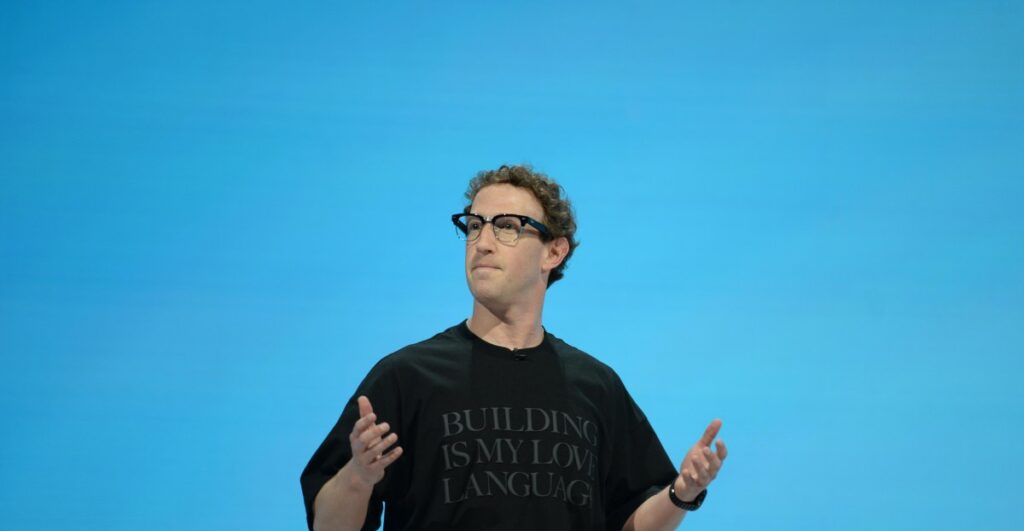
That changed on Monday when Meta finally unveiled a model capable of competing with the best in the industry. Based on the company’s testing, Muse Wonder Full can compete with leading OpenAI and Anthropic models, including GPT-6 Astra, Claude Opus 5.5, and Claude Fable 5.1, in numerous benchmarks. In other words, Mark Zuckerberg’s company has finally reached the frontier of AI.
Google’s return (and the arrival of Meta) makes the AI competition considerably more dynamic and shows how quickly the balance of power in the AI world can shift. Both have extraordinarily deep pockets and vast ecosystems of products used by billions of people, advantages that AI startups like OpenAI and Anthropic simply can’t match. The success of Meta’s Muse agent assistant illustrates that advantage. Its popularity in such a short time, and despite the growing list of security and privacy concerns, shows the power of having billions of users at your fingertips. Meanwhile, OpenAI has to work harder to establish an ecosystem of its own, positioning itself as an alternative to Meta.
All of this comes as the AI race appears to be entering a new phase. The push to develop ever more powerful models is becoming increasingly strained. The growing range of security concerns and unauthorized AI incidents means calls to curb development are growing louder. Open models are also getting better, making it difficult for a company to stay ahead for long.
If raw power and performance are no longer enough to stay ahead, Google and Meta have many advantages that Anthropic and OpenAI do not enjoy. They may have spent a lot of time catching up, but last week shows that it would be incredibly foolish to write any of them off.