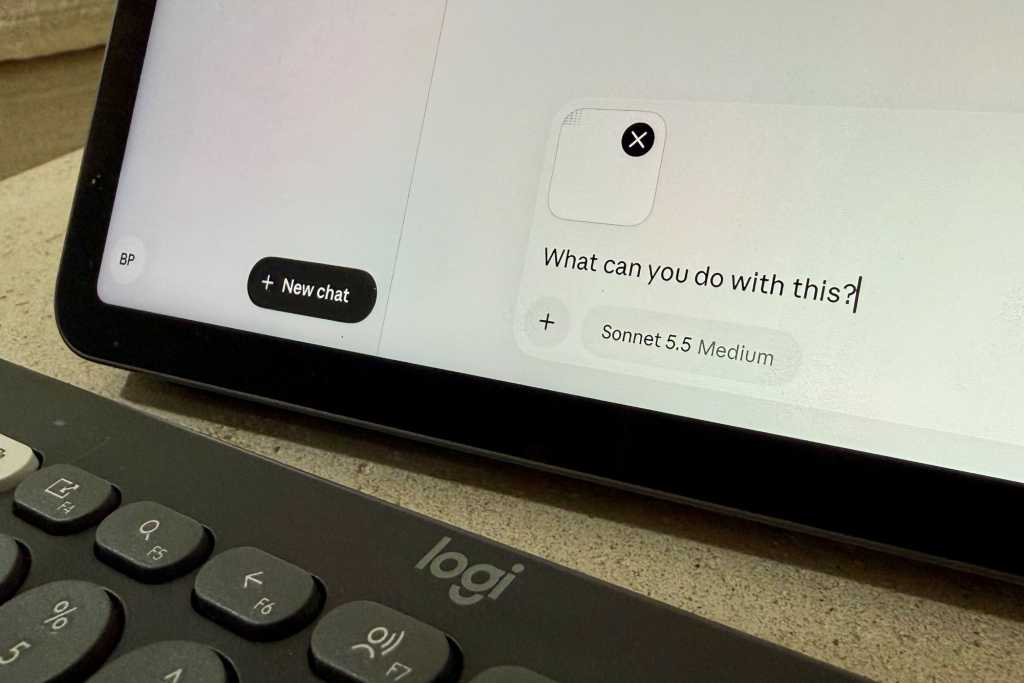
In Anthropic’s benchmarks, Sonnet 5.5 achieves scores that rival Opus 5.5 in areas like agentic coding and computer usage, although the latest Opus model is still on top in terms of “complex, open-ended work that requires sustained judgment,” Anthropic notes. Still, Sonnet 5.5 seems surprisingly powerful and affordable compared to the Claude Opus, and it also has the distinction of being the default Claude model for free users.
In any case, with a new Claude model comes a new directions guide, and the guide for the latest Sonnet contains a gem that could be useful for other AI models, particularly those capable of building things.
The notice refers to “open” requests, including those that do not strictly define the boundaries of what AI should and should not do. An example provided by Anthropic is “show me what you can do with this,” with “this” being anything from an Excel spreadsheet to a snippet of code.
Like ChatGPT and Gemini, Claude can spontaneously start creating charts, reports, videos, and other “artifacts” on the fly depending on your request, and an open request could generate an artifact that you didn’t explicitly request. Needless to say, those artifacts will affect your Claude usage limits, which isn’t great if you didn’t want them to begin with.
In my tests, Sonnet 5.5 was pretty good at keeping its responses to text only when I handed it an Excel spreadsheet with made-up operating costs and asked “show me what you can do with this,” but in at least one case it generated a graph on its own.
I previously wrote about prompts designed to prevent AI models from rushing, including one that tells an AI to stay in “pencil and paper” mode. But in Claude Sonnet’s prompt guide 5.5, Anthropic shares a new prompt for reducing preventive construction: