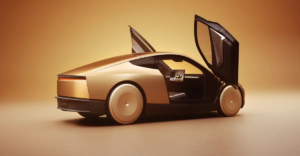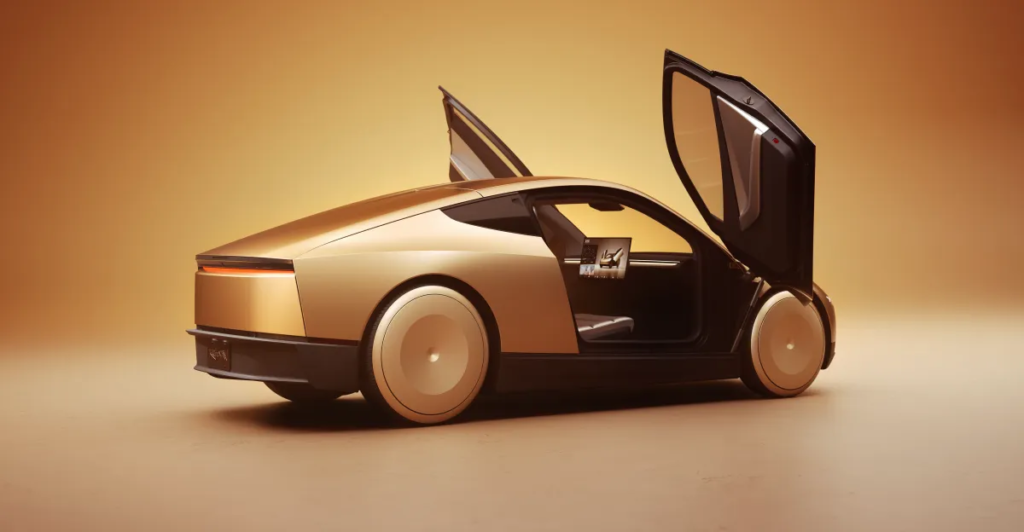
Tesla is doubling down, or perhaps tripling down, its bold claims of an autonomous future by offering “select customers” to purchase a Cybercab for “personal use.” But the gold, steering-wheel-less two-seater “will only be available in supported service areas,” meaning you can only buy one if you live in one of the cities where Tesla currently operates its Robotaxi service.
The price of a Cybercab is $29,990, plus a mandatory “autonomy subscription” of $299 per month. Tesla’s Robotaxi account on X announced the new offer, including screenshots of the order page and invitation email. But don’t expect a fleet of personally owned Cybercabs to suddenly materialize on public roads: “Initial availability is limited,” the invitation email warns.
Tesla began offering Cybercab rides as part of its Model Y-powered Robotaxi service in Austin in September. The company now has 278 Cybercabs in operation, representing about 40 percent of its fleet, according to crowdsourced Robotaxi Tracker.
The inclusion of a mandatory $299 a month subscription is sure to upset some fans who may have dreamed of riding in a $30,000 self-driving Tesla, as Tesla CEO Elon Musk originally promised when he first unveiled the Cybercab in 2024. Musk didn’t mention the autonomy subscription at that event, though it shouldn’t be a big surprise given the $99 a month fee Tesla currently charges for its full self-driving (FSD) feature.
Still, that money adds up over time. Over a standard 5-year ownership period, the mandatory $299/month fee adds $17,940 to the sticker price (even with the first month included), bringing the actual base cost to about $47,600 before taxes, fees, and insurance—more than a new Model 3 or Model Y that you can actually drive anywhere in the country.
Unlike a standard Tesla, where canceling FSD simply reverts the car to manual driving, canceling the $299-a-month Range Subscription leaves the Cybercab completely unusable on public roads because there’s no manual backup. In effect, the car turns into a brick. Additionally, Tesla says buyers will have to put down a $1,000 non-refundable deposit just to get in line for a December delivery window that isn’t guaranteed.
One of the biggest selling points of Musk’s 2024 “We Robot” speech was that everyday people could buy a Cybercab and add it to Tesla’s Robotaxi network to earn passive income while they sleep or work. But the terms of the order explicitly prohibit owners from using the vehicle for commercial purposes, meaning no Uber, no DoorDash, and not putting it on Tesla’s own Robotaxi network to offset the $299 a month fee. Tesla AI chief Ashok Elluswamy has floated the second quarter of 2027 as a possible target to allow customer cars to join the network, with early buyers paying full freight with no chance to monetize the car.
Plus, Tesla only has to give you 30 days’ notice before raising the price. If they update the rules and you continue to use the service, you automatically agree to the new terms. Additionally, if you cancel, or if Tesla suspends your access, you will not receive a partial refund for the remainder of the month you already paid.
Of course, that’s just the fine print. At X, Tesla CEO Elon Musk promised a much broader rollout, subject, of course, to “regulatory approval.” Musk frequently sees regulatory approval as the main external bottleneck slowing down his robotaxi schedules as a way to divert attention from Tesla’s technological shortcomings.
(For what it’s worth, he also called his own company’s $299/month autonomy subscription “too high,” arguing that it should actually be $115/month or closer to Tesla’s $99/month full self-driving subscription.)
But Musk seemed more focused on mocking YouTuber Marques Brownlee, who promised to shave his head if Tesla delivered a Cybercab for less than $30,000 before 2027, than on answering any of the litany of safety and liability questions raised by this offering. (For her part, Brownlee says she believes her hair is safe.)
For starters, how does Tesla plan to sell a vehicle that doesn’t meet current Federal Motor Vehicle Safety Standards that require traditional controls like steering wheels and pedals? Tesla says the Autonomy Subscription covers autonomous driving, maintenance and towing, but explicitly excludes auto insurance. The company has not explained how personal auto insurers will underwrite a car without a human driver, or how liability is divided between the owner and Tesla if the vehicle causes an accident while operating autonomously. Tesla also has not revealed how it selects guest buyers or how many units are earmarked for private sale compared to its internal fleet.
Then there’s the small matter that the National Highway Traffic Safety Administration is already opening a formal audit into how Tesla self-certified a vehicle without a steering wheel, pedals, or side mirrors. Tesla submitted its legal justification to NHTSA in October, requested that the entire response be kept confidential, and is now accepting customer deposits while the NHTSA ruling is still pending.
Which means that not only are early buyers paying $47,600 for a geofenced car they can’t drive, they’re putting down non-refundable cash on a vehicle that the federal government hasn’t even decided is road-legal.