When I declared this spring that Vivo’s
You won’t find either in the new X500 Pro Max. It has an impressive camera system with world-leading dynamic range and the same large telephoto lens found on the Ultra. But it has lost some of what made its predecessor so special.
$2000
the good
- Fantastic telephoto camera
- 17 stops of dynamic range on the main camera
- Large 7,800 mAh battery
- 1440p, 144Hz display
bad
- The ultra-wide camera is a weak link
- Drop the X300 Ultra’s main 35mm camera
- Expensive
The X500 Pro Max is the latest in a trend that has seen China’s major Android players launch Pro Max models, including Xiaomi, Oppo, Honor and now Vivo. The new models close the gap between their previous Pro flagships and the camera-focused Ultra models or, if you prefer to be cynical about it, they are an excuse to put “Max” on the box to better mask RAM-induced price increases. A little bit of column A, a little bit of column B, I suspect.
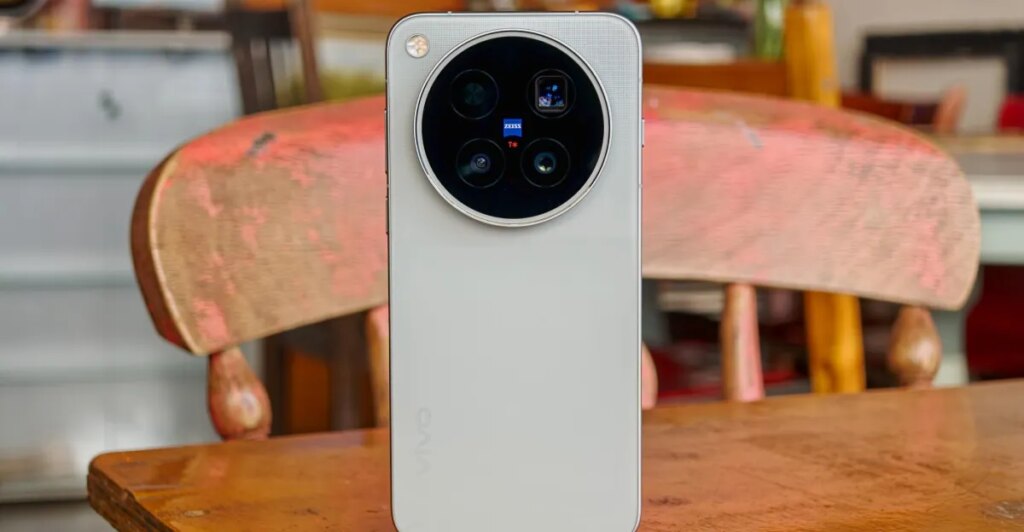
The Pro Max adopts many of the flagship features found on the previous Ultra. It’s the same size, for example, and has a 1440p 144Hz OLED display to match. It has an even larger battery (7,800 mAh) that lasts two days of use, with similar 90W wired and 40W wireless charging. Unlike the Ultra, it doesn’t use the latest Snapdragon chipset, but its MediaTek Dimensity 9600 Pro offers roughly comparable performance. It even features the exact same periscope telephoto camera, one of the best on any phone. Then there’s the price: 1,799 euros (about $2,000) puts it squarely in the ultra-premium range.
But despite all that, this is not a true successor to the X300 Ultra, which is still rumored to see a direct sequel next year. The The problem is not that this camera is worse than that of that phone, but it is much less only.
As you’d expect from an inferior model, the 50-megapixel 1/1.28-inch main camera sensor is smaller and has a lower resolution than the Ultra, which affects its quality. But the newest phone makes up for that a bit thanks to one advantage of the Ultra: it uses Sony’s new Lytia L910 image sensor, which features LOFIC technology that allows for a wider dynamic range of 17 stops, with improvements mainly in the most prominent areas.
But the X300 Ultra’s camera not only stood out for its technical quality. I loved the fact that it adopted a 35mm focal length and I’m disappointed that the Pro Max reverts to the same 24mm focal length found on iPhones and many others.
This, like most main phone cameras, is actually a wide angle. It’s designed to capture as much of the scene as possible, reserving the ultra-wide angle for truly large landscape shots. It’s part of the reason I’ve taken a step back and used the telephoto lens by default on many phones, enjoying tighter framing and better bokeh, but that often comes with other quality compromises, especially in low light.
I’m stubborn about shooting at all focal lengths on my cameras whenever I can, and you should be too.
In contrast, a 35mm main camera is more like many of the prime and kit lenses you might use on a regular camera, narrow enough to use for portraits and intentional framing. It sits more evenly between the 14mm ultra-wide and 85mm telephoto, giving you natural options across the range. Of course, you could use the X500 Pro Max’s 24mm main camera and zoom in a bit, but then you’re wasting some of the sensor and relying on digital zoom tricks, rather than making the most of the lens optics. I’m stubborn about shooting at all focal lengths on my cameras whenever I can, and you should be too.
If there’s a saving grace in the decision to revert to a wider main camera, it’s that it helps make up for the X500 Pro Max’s other shortcoming: a much smaller ultrawide camera sensor.
The ethos of the X300 Ultra was that all three lenses should offer comparable quality. As such, it treated its ultra-wide angle like another main camera, with a large sensor and even optical image stabilization, a rarity in wide-angle lenses. In fact, its sensor is the same size as that of the X500 Pro Max. main cameraSo that feat was never particularly likely to be repeated, but the 1/2.75-inch type ultrawide on the X500 Pro Max is still a notable step down.
Taking the phone to a Champions League night match, there was a clear gap in quality when moving from the ultra-wide lens to the other two. Under the bright lights of the stadium, the ultrawide washed out the white details of the field and the players’ kits and left the crowd in relative darkness. The main and ultrawide managed to bring out more detail from low-light viewers and better handle highlights in the field, without completely giving up the contrast that gave character to the scene.
1/19
It’s important to put these complaints in context: this is a truly excellent camera system for a phone, and even more capable than anything you can officially buy in the US. The returning telephoto lens in particular is exceptional; Each lens benefits from Vivo’s naturalistic color adjustment, developed together with Zeiss, and video capabilities include log recording and 4K slow motion at 240fps. It’s also compatible with Vivo’s teleconverter lenses, including a very thick 400mm option. It’s a shame that the Ultra’s most interesting camera elements didn’t also make it to its first Pro Max.
Interestingly, another phone I tested this month appears to have picked up where the X300 Ultra left off: Oppo’s Find X10 Pro Max, a fairly direct rival to this phone. Its 200-megapixel triple camera system still uses a wide-angle main camera, but at least includes a substantially improved ultra-wide camera to create the same feeling that each of its three rear lenses is of comparable quality.
All I hope now is that when the X500 Ultra arrives this spring, it builds on the success of the previous Ultra and maybe finds new ways to make its cameras stand out. After all, if the Pro Max costs €1,799, the Ultra could cost a lot more and you’ll have to work hard to prove it’s worth it. he.
Photography by Dominic Preston / The Verge